Quick Answer
If you have been asked to reach Muslim consumers in the USA and you are starting from a blank page, this guide gives you the numbers, the mindset and the channels. It is written for brand managers, agency teams and business owners who want to do this well rather than once. We organize a business summit for Muslim founders, so we spend a lot of time with the business side of this community.
Every statistic here is from a named source and was checked on November 18, 2026.
Who are Muslim consumers in the USA?
Two things jump out. First, the population estimates differ by source, from 5.5 million to 8 million, because the US Census does not ask about religion. Always name the source next to the number you use. Second, this is a young market. A median age of 34 means a large share of first time home buyers, new parents and new business owners.
| Measure | Figure | Source |
|---|---|---|
| Population | About 5.5 million (up from 2.4 million in 2007) | Pew Research Center, September 2026 |
| Alternative estimates | 7.47 million (DinarStandard); about 8 million (CAIR) | DinarStandard 2025; CAIR 2026 |
| Projected population | 8.1 million by 2050, second largest US religious group before 2040 | Pew Research Center projection, 2018 |
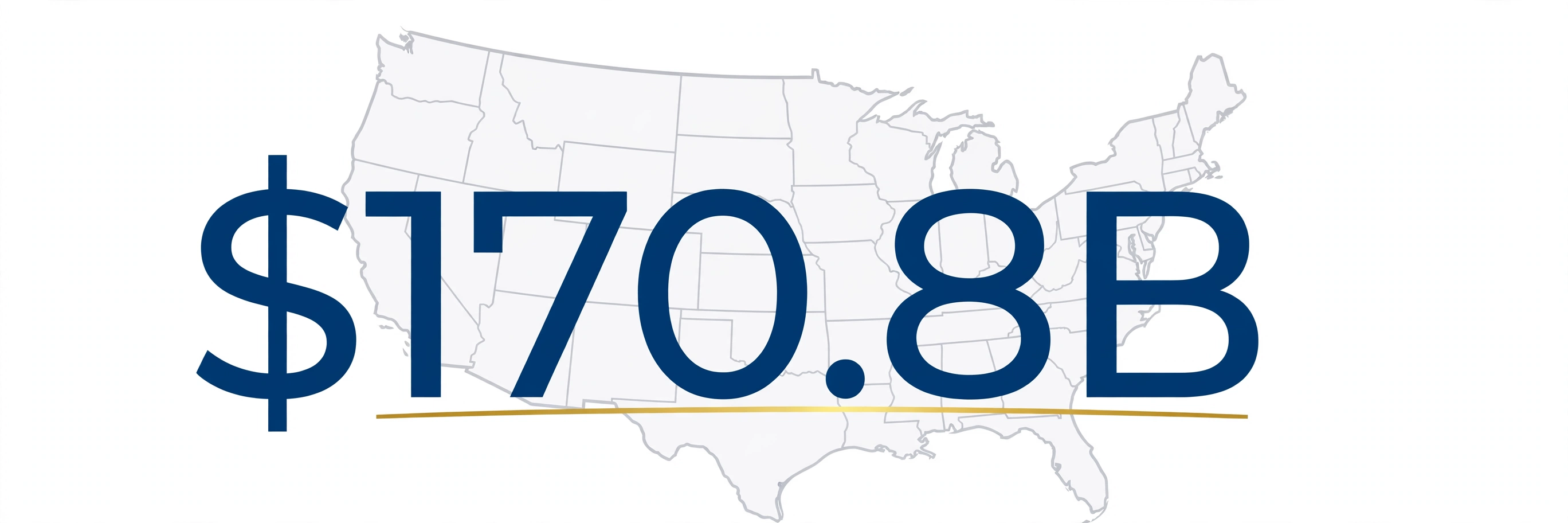
| Annual consumer spending | $170.8 billion (2024) | DinarStandard for the Thrive Summit |
| Median age | 34; 77 percent are under 50 | DinarStandard |
| Adults aged 18 to 29 | 35 percent of Muslim adults | Pew Research Center, 2025 |
| College degree | 36 percent of adults | ISPU American Muslim Poll 2025 |
| Where businesses cluster | California, Texas, Florida and New York | DinarStandard |
What wins trust with Muslim consumers?
DinarStandard's North America consumer survey found that Muslim consumers rate Islamic values as very or extremely important when buying food and dining (59 percent), education (52 percent), clothing (52 percent) and travel (45 percent). The same survey identified housing finance (39 percent), investments and savings (34 percent) and personal insurance and pensions (34 percent) as the biggest unmet needs. In plain words: the market cares about whether your product fits their values, and the biggest gaps are in finance.
Here is what that means in practice:
Which channels actually reach Muslim consumers?
Bizzabo's 2026 research found 78 percent of organizers rate in person events their most impactful marketing channel. For a community that organizes heavily around physical gatherings, that holds even more. Our guide on how to sponsor a business conference shows how to pick and price the right room, and our list of Muslim business conferences in the USA gives you the 2027 calendar.
| Channel | Works well for | Watch out for |
|---|---|---|
| Community conventions and bazaars | Consumer products, family brands; MAS Chicago has over 700 booths, ICNA MAS Baltimore 500 plus | Crowds are large and mixed; conversion depends on booth staff |
| Business summits | B2B brands, financial services, professional services; LEAD Summit is 300 founders | Smaller reach, deeper access |
| Mosque and community partnerships | Local retail, services, healthcare | Must be relationship led, not transactional |
| Muslim media and creators | Younger consumers, fashion, food, fintech | Vet creators for fit; the community notices performative campaigns |
| Ramadan and Eid campaigns | Food, gifts, giving, travel | A once a year appearance reads as opportunism |
| Search and social | Everything | Keyword research should include halal, zakat, Eid and Ramadan terms |
What mistakes should brands avoid?
How do you start?
If your buyers are business owners, the LEAD Summit sponsorship page lists a $25,000 Title Sponsor package and a $1,800 standard expo booth, for a room of 300 Muslim entrepreneurs, executives and decision makers in Chicago, June 5 to 6, 2027.
Frequently asked questions
How big is the Muslim consumer market in the USA?
DinarStandard estimates US Muslim consumer spending at $170.8 billion in 2024. Population estimates range from 5.5 million (Pew Research Center) to about 8 million (CAIR).
What matters most to Muslim consumers when buying?
Islamic values, especially in food and dining (59 percent say very or extremely important), clothing (52 percent) and travel (45 percent), per DinarStandard. Halal certification and riba free finance are the clearest signals.
Is Ramadan marketing enough to reach Muslim consumers?
No. Ramadan matters, but brands that appear only in Ramadan are seen as opportunistic. A 12 month plan with real community presence performs better.
What are the best channels to reach Muslim Americans?
Community conventions and bazaars for consumer products, business summits for B2B, mosque partnerships for local services, and Muslim media and creators for younger audiences.
Where do Muslim consumers and businesses concentrate in the USA?
Muslim owned small businesses cluster in California, Texas, Florida and New York, according to DinarStandard. Large communities also exist in Illinois, New Jersey and Michigan.